Hello,
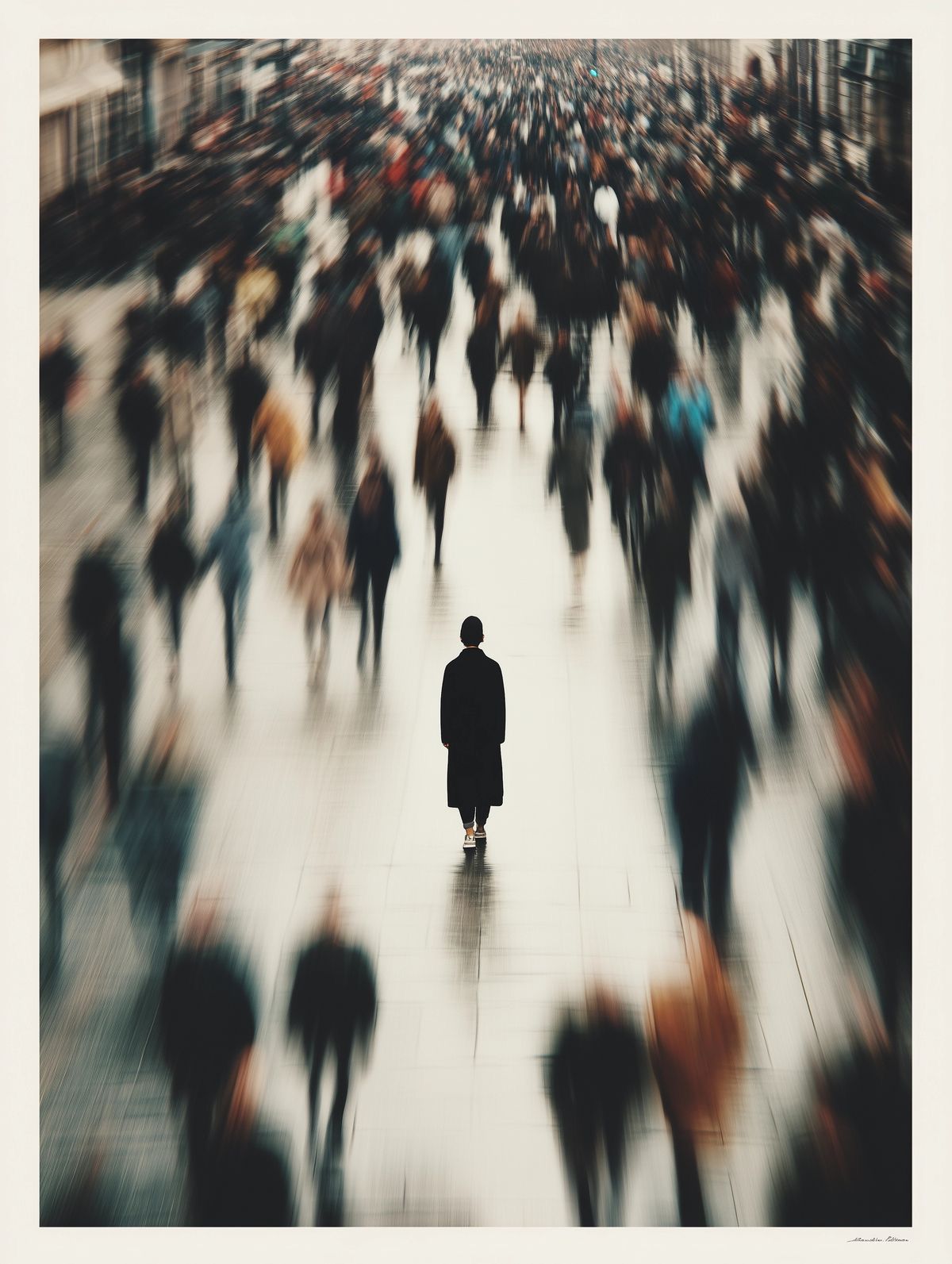
I was reading Mark 8:24, and something dawned on me: In this passage, Jesus heals a blind man, and when He asks him what he can see, the man replies, “I see men like trees, walking.” He could see, but not clearly. This stayed with me. It felt oddly familiar because many of us see people the same way. We see them, but not well. We put them into categories that feel easier to manage: the person beneath us, the colleague we tolerate, the cleaner we overlook; the list goes on. We reduce people to trees instead of seeing them for who they truly are.
Have you ever wondered why God made a helper for Adam in the garden? Why were we given biological parents? Why we belong to certain families? Why we have mentors, teachers, and friends? I’ll leave you to ponder on that. My conclusion: we need relationships. We need people. A lot of us, especially those who grew up in black, dysfunctional families like I did, might convince ourselves otherwise.
Our families never saw value in keeping and maintaining relationships. They never taught us the basics of communication or conflict resolution. One misunderstanding could turn into years of silence, until entire families stopped speaking and no one could remember why. What’s worse, even children inherit battles they do not even understand. Why? A rumour was heard, or there was a misunderstanding, and instead of addressing it, sides were taken, and the conflict was passed down without question.
Sadly, these patterns are still visible today. People struggle to disagree and resolve issues without choosing silence or distance. Even into adulthood, the patterns of our family background follow us. Our grandparents and parents saw people like trees, and without noticing it, passed those behaviours on. We, too, see men like trees. Ask yourself: how many people do you not speak to, avoid, dislike, or refuse to speak to because of a misunderstanding, an inherited conflict, or a grudge? There’s your answer.
The reality is that many of us struggle because we think relationships are about status. This is what we were taught, perhaps even from observation. We view people based on titles, positions, or perceived importance, either theirs or ours. This perception reduces people and narrows how we move through life. It does not just affect families; it shows up at work, in church, in friendships, and even in how we treat strangers. We decide who matters based on proximity, usefulness, or visibility. Some people are listened to, others are tolerated, and some are ignored completely. Over time, this becomes normal, and we stop questioning it.
What I love about the scripture we read above is that the man could see, but not fully. It was a partial vision, but partial vision is still vision; it is just distorted. It convinces us that we are seeing enough when we are not. The issue is not whether we see people, but whether we are willing to see them well. And seeing people well does not mean everyone gets access to you. It means remembering that there is always more to a person than what meets the eye.
Seeing people well also means examining the stories we tell ourselves: stories formed from one interaction, passed down through narratives, or built on assumptions. Over time, stories inform our conclusions, and conclusions shape how we treat people. And if we don’t challenge them, we stop seeing people as they are and start seeing them as we expect them to be, trees.
From the beginning, God saw that it was not good for a man to be alone and made him a suitable helper. That principle has not changed. And if we are going to build anything that lasts, whether it’s a career, a friendship, a family, a ministry, or your life, our ability to see people well will either support it or sabotage it.
My advice for the new year: take relationships seriously. Don’t let anyone convince you that the only people you need are your close friends; that’s a limited way of thinking. We need colleagues, acquaintances, family, people who can connect us to opportunities, and to other people in general. At this stage of life, or at any stage really, undervaluing relationships is carelessness. We are far too young and far too resource-limited to act as if people do not matter. Don’t go around burning bridges.
Blessed day,


Leave a Reply